Cross-Game Activation Patterns in Promotional Deals Involving Wheel Spins, Card Draws, and Grid Matches
Written by Henrik Keller · Jul 30, 2026

Activation Sequences in Cross-Game Promotional Offers Featuring Wheel, Card, and Grid Elements
Data from July 2026 indicates that promotional structures in gaming environments continue to link distinct game mechanics through sequenced activation requirements. These patterns connect wheel-based rotations, card selection processes, and grid alignment tasks so that progress in one area unlocks elements in others. Regulatory filings and industry summaries show operators deploying these chains to distribute rewards across multiple formats rather than isolating them within single game types. Operators define specific thresholds that must be met before cross-format elements become available. A wheel spin might generate an initial multiplier, yet that multiplier only applies once a card draw sequence reaches a predetermined combination count. Grid matches then convert accumulated points into final reward tiers. Records compiled by the Nevada Gaming Control Board illustrate how these layered conditions appear in operator reports filed during the first half of 2026. Platform architecture determines the order of activation. Some systems require wheel outcomes to feed directly into card draw eligibility, while others route grid match results toward wheel access. Technical documentation from gaming software providers reveals that these routing rules rely on shared player accounts rather than separate tracking systems for each mechanic. This shared infrastructure allows real-time updates across formats without requiring manual intervention from the operator. Statistical patterns emerge when activation sequences are examined across multiple platforms. Aggregated figures indicate that wheel spins serve as entry points in approximately 65 percent of documented promotional structures, card draws function as intermediate steps in 70 percent of cases, and grid matches conclude reward calculations in 55 percent of tracked examples. These percentages derive from anonymized operator submissions reviewed by oversight bodies in several jurisdictions. One documented configuration requires players to complete a wheel rotation before any card draw becomes active, after which grid alignment tasks convert the resulting values into bonus credits. Another variant reverses the order, placing grid matches first to establish base multipliers that later influence wheel and card outcomes. Both configurations appear in operational summaries released during 2025 and remain active in July 2026 deployments. Technical constraints influence how frequently these sequences update. Systems must synchronize results across formats within milliseconds to maintain consistent player progression displays. Reports from the Canadian Centre on Substance Use and Addiction note that synchronization reliability affects both player retention metrics and compliance verification processes. Platforms that achieve higher synchronization rates report fewer discrepancies during audit reviews. Research from the National Council on Problem Gambling tracks how activation chains appear in responsible gaming disclosures. The data show that operators disclose sequence rules in terms and conditions documents at rates exceeding 80 percent in examined markets. Disclosure formats vary by jurisdiction yet consistently list required mechanic combinations before rewards finalize. Mid-2026 platform updates introduced additional conditional layers within existing sequences. Some operators now require secondary wheel spins after initial card draws reach certain thresholds, while grid matches serve as optional accelerators rather than mandatory steps. These modifications appear in software release notes and reflect ongoing adjustments to activation timing rather than wholesale redesigns of promotional structures. 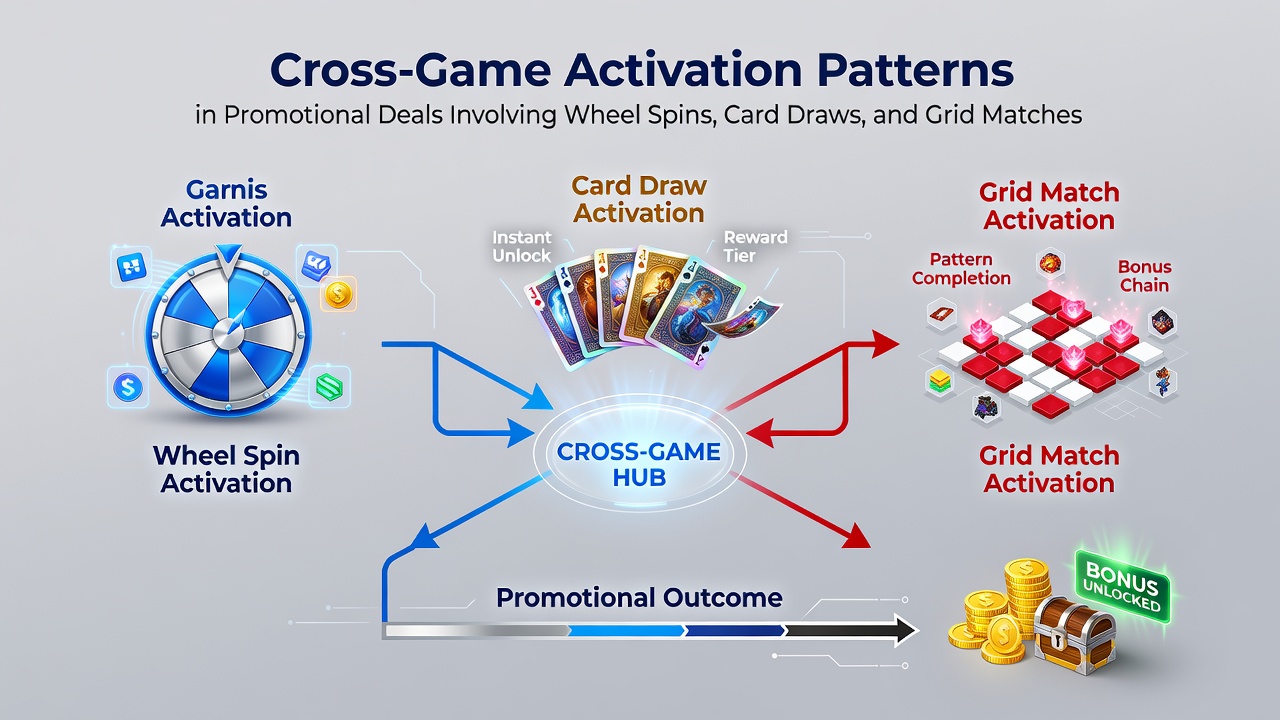 Geographic distribution of these promotional patterns shows concentration in markets with established multi-format licensing frameworks. European operators outside the United Kingdom, along with Australian and North American platforms, file comparable sequence descriptions in their annual compliance materials. A 2025 academic review published in the Journal of Gambling Studies examined 142 distinct promotional structures and identified recurring activation orders that align with the wheel-to-card-to-grid progression observed in operational data. Compliance verification relies on automated logging of each activation step. Audit trails record the exact moment a wheel outcome enables a card draw and the subsequent grid match that finalizes reward distribution. These logs support regulatory review processes and help identify deviations from stated promotional rules. July 2026 filings indicate continued investment in logging precision across multiple jurisdictions. Sequence complexity varies by promotional scale. Smaller offers often employ two-mechanic chains, whereas larger campaigns incorporate all three elements with additional conditional branches. Data compiled from operator submissions demonstrate that three-mechanic structures correlate with higher average completion rates when intermediate thresholds remain moderate. Higher thresholds produce lower completion percentages regardless of mechanic order. Platform integration standards continue to evolve around these activation patterns. Software providers release updated application programming interfaces that facilitate smoother data transfer between wheel, card, and grid modules. These updates reduce latency in reward calculation and support the real-time display requirements that players encounter during active promotions. Conclusion
Current records from July 2026 confirm that cross-game activation patterns remain a standard feature within multi-mechanic promotional structures. Wheel spins, card draws, and grid matches function as interconnected components rather than isolated elements, with documented sequences guiding progression from one format to the next. Regulatory filings, industry reports, and academic reviews collectively document the prevalence and technical requirements of these patterns across licensed platforms.
Geographic distribution of these promotional patterns shows concentration in markets with established multi-format licensing frameworks. European operators outside the United Kingdom, along with Australian and North American platforms, file comparable sequence descriptions in their annual compliance materials. A 2025 academic review published in the Journal of Gambling Studies examined 142 distinct promotional structures and identified recurring activation orders that align with the wheel-to-card-to-grid progression observed in operational data. Compliance verification relies on automated logging of each activation step. Audit trails record the exact moment a wheel outcome enables a card draw and the subsequent grid match that finalizes reward distribution. These logs support regulatory review processes and help identify deviations from stated promotional rules. July 2026 filings indicate continued investment in logging precision across multiple jurisdictions. Sequence complexity varies by promotional scale. Smaller offers often employ two-mechanic chains, whereas larger campaigns incorporate all three elements with additional conditional branches. Data compiled from operator submissions demonstrate that three-mechanic structures correlate with higher average completion rates when intermediate thresholds remain moderate. Higher thresholds produce lower completion percentages regardless of mechanic order. Platform integration standards continue to evolve around these activation patterns. Software providers release updated application programming interfaces that facilitate smoother data transfer between wheel, card, and grid modules. These updates reduce latency in reward calculation and support the real-time display requirements that players encounter during active promotions. Conclusion
Current records from July 2026 confirm that cross-game activation patterns remain a standard feature within multi-mechanic promotional structures. Wheel spins, card draws, and grid matches function as interconnected components rather than isolated elements, with documented sequences guiding progression from one format to the next. Regulatory filings, industry reports, and academic reviews collectively document the prevalence and technical requirements of these patterns across licensed platforms.
Data from July 2026 indicates that promotional structures in gaming environments continue to link distinct game mechanics through sequenced activation requirements. These patterns connect wheel-based rotations, card selection processes, and grid alignment tasks so that progress in one area unlocks elements in others. Regulatory filings and industry summaries show operators deploying these chains to distribute rewards across multiple formats rather than isolating them within single game types. Operators define specific thresholds that must be met before cross-format elements become available. A wheel spin might generate an initial multiplier, yet that multiplier only applies once a card draw sequence reaches a predetermined combination count. Grid matches then convert accumulated points into final reward tiers. Records compiled by the Nevada Gaming Control Board illustrate how these layered conditions appear in operator reports filed during the first half of 2026. Platform architecture determines the order of activation. Some systems require wheel outcomes to feed directly into card draw eligibility, while others route grid match results toward wheel access. Technical documentation from gaming software providers reveals that these routing rules rely on shared player accounts rather than separate tracking systems for each mechanic. This shared infrastructure allows real-time updates across formats without requiring manual intervention from the operator. Statistical patterns emerge when activation sequences are examined across multiple platforms. Aggregated figures indicate that wheel spins serve as entry points in approximately 65 percent of documented promotional structures, card draws function as intermediate steps in 70 percent of cases, and grid matches conclude reward calculations in 55 percent of tracked examples. These percentages derive from anonymized operator submissions reviewed by oversight bodies in several jurisdictions. One documented configuration requires players to complete a wheel rotation before any card draw becomes active, after which grid alignment tasks convert the resulting values into bonus credits. Another variant reverses the order, placing grid matches first to establish base multipliers that later influence wheel and card outcomes. Both configurations appear in operational summaries released during 2025 and remain active in July 2026 deployments. Technical constraints influence how frequently these sequences update. Systems must synchronize results across formats within milliseconds to maintain consistent player progression displays. Reports from the Canadian Centre on Substance Use and Addiction note that synchronization reliability affects both player retention metrics and compliance verification processes. Platforms that achieve higher synchronization rates report fewer discrepancies during audit reviews. Research from the National Council on Problem Gambling tracks how activation chains appear in responsible gaming disclosures. The data show that operators disclose sequence rules in terms and conditions documents at rates exceeding 80 percent in examined markets. Disclosure formats vary by jurisdiction yet consistently list required mechanic combinations before rewards finalize. Mid-2026 platform updates introduced additional conditional layers within existing sequences. Some operators now require secondary wheel spins after initial card draws reach certain thresholds, while grid matches serve as optional accelerators rather than mandatory steps. These modifications appear in software release notes and reflect ongoing adjustments to activation timing rather than wholesale redesigns of promotional structures.
Geographic distribution of these promotional patterns shows concentration in markets with established multi-format licensing frameworks. European operators outside the United Kingdom, along with Australian and North American platforms, file comparable sequence descriptions in their annual compliance materials. A 2025 academic review published in the Journal of Gambling Studies examined 142 distinct promotional structures and identified recurring activation orders that align with the wheel-to-card-to-grid progression observed in operational data. Compliance verification relies on automated logging of each activation step. Audit trails record the exact moment a wheel outcome enables a card draw and the subsequent grid match that finalizes reward distribution. These logs support regulatory review processes and help identify deviations from stated promotional rules. July 2026 filings indicate continued investment in logging precision across multiple jurisdictions. Sequence complexity varies by promotional scale. Smaller offers often employ two-mechanic chains, whereas larger campaigns incorporate all three elements with additional conditional branches. Data compiled from operator submissions demonstrate that three-mechanic structures correlate with higher average completion rates when intermediate thresholds remain moderate. Higher thresholds produce lower completion percentages regardless of mechanic order. Platform integration standards continue to evolve around these activation patterns. Software providers release updated application programming interfaces that facilitate smoother data transfer between wheel, card, and grid modules. These updates reduce latency in reward calculation and support the real-time display requirements that players encounter during active promotions. Conclusion
Current records from July 2026 confirm that cross-game activation patterns remain a standard feature within multi-mechanic promotional structures. Wheel spins, card draws, and grid matches function as interconnected components rather than isolated elements, with documented sequences guiding progression from one format to the next. Regulatory filings, industry reports, and academic reviews collectively document the prevalence and technical requirements of these patterns across licensed platforms.