Contribution Hierarchies and Bonus Optimization in UK Online Casinos
Written by Henrik Russell · Jul 18, 2026

Contribution Hierarchies and Bonus Optimization in UK Online Casinos
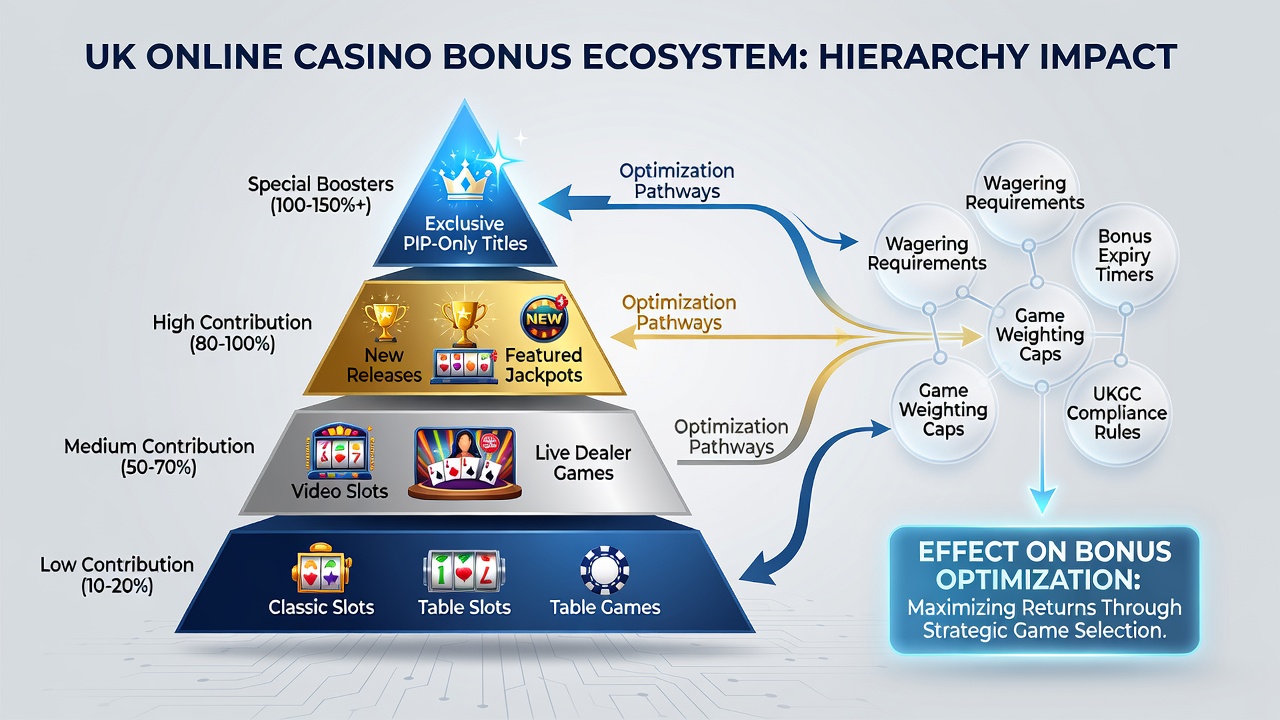
Game contribution hierarchies establish the percentage each title adds toward wagering requirements attached to casino bonuses, and participants across UK platforms apply these structures when selecting games to clear terms efficiently. Data from industry reports shows slots typically contribute 100 percent while roulette and blackjack often register between 10 and 20 percent, creating clear differences in how quickly requirements reach completion. Observers note that these weighted systems emerged as operators balanced risk across game types, and players respond by prioritizing high-contribution options during active bonus periods.
Core Mechanics of Contribution Weights
Each game carries a predetermined contribution rate that multiplies the amount wagered toward the total needed before withdrawals become possible, and this rate appears in bonus terms alongside minimum deposit figures and maximum win caps. Research indicates that video slots and progressive jackpots usually sit at the top of the hierarchy because they generate consistent revenue streams for operators, whereas live dealer tables and certain video poker variants sit lower because house edges differ. Those who study player behavior report that participants review these percentages before activating bonuses, since choosing low-contribution games extends the time required to meet playthrough thresholds.
Strategic Adjustments Among Regular Participants
Players map contribution rates against current bonus offers to decide which titles to load first, and this mapping produces repeatable patterns visible in session data across multiple sites. When a bonus requires 30 times the deposit plus bonus amount, selecting 100-percent contribution games shortens the number of spins or hands needed compared with mixing in lower-weighted options. Figures reveal that many accounts shift toward slot-focused sessions during bonus windows while returning to table games once wagering completes, demonstrating a practical response to the hierarchy rather than random selection.
Regional Comparisons and Broader Data
Analyses from the European Gaming and Betting Association highlight similar weighting patterns across several European markets, where slot contributions remain elevated relative to card and wheel games. A separate study conducted through Canadian research channels reached parallel conclusions about player migration toward high-contribution categories when time-limited promotions appear. These cross-border observations suggest the hierarchy influences decision-making beyond any single jurisdiction, although exact percentages still vary by operator policy.
Game Categories and Typical Weight Ranges
Slots, including themed video slots and megaways titles, occupy the uppermost tier with full 100-percent contribution in most published terms. Roulette, blackjack, and baccarat commonly contribute between 10 and 20 percent, while bingo and certain scratch-card products fall in the 50-to-75-percent band. Live casino variants sometimes receive reduced rates to account for slower round times, and this differentiation encourages participants to calculate expected completion times before committing funds. Documentation from platform operators shows these categories remain stable across updates, although occasional promotions temporarily adjust weights for specific titles.
Observed Patterns During July 2026
Industry updates released around July 2026 indicated continued emphasis on contribution transparency, with several platforms publishing clearer breakdowns alongside new game launches. Session logs from that period reflected steady use of high-contribution slots during bonus activation windows, followed by transitions to lower-weighted titles once requirements cleared. Reports compiled by research groups outside the UK noted that participants increasingly tracked contribution changes through in-app notifications rather than external spreadsheets, streamlining the optimization process.
Long-Term Effects on Account Management
Repeated exposure to these hierarchies leads participants to maintain separate mental or written lists of preferred titles for bonus versus non-bonus play, and this segmentation appears in account histories spanning multiple months. Data shows that accounts employing deliberate game sequencing complete wagering cycles in fewer total rounds than those selecting games without reference to contribution rates. Operators respond by adjusting promotional calendars to feature high-contribution games during peak bonus periods, reinforcing the cycle without altering the underlying weight structure.
Conclusion
Contribution hierarchies function as fixed parameters within bonus agreements, and UK participants incorporate these parameters into game selection routines to manage wagering timelines. Available figures demonstrate consistent differentiation across game types, and external analyses confirm that similar systems operate in neighboring markets. As platforms continue publishing updated terms, the relationship between contribution rates and player sequencing remains a measurable aspect of online casino activity.